
Together with psychotherapist Przemek Mućko, we brought the characters and stories of Look Inside to life. In our interview, he shares what excites him about our mental health board game and what it was like working together.
I can hardly imagine anything quite like it: a game about mental health that helps you see the world through someone else’s eyes.
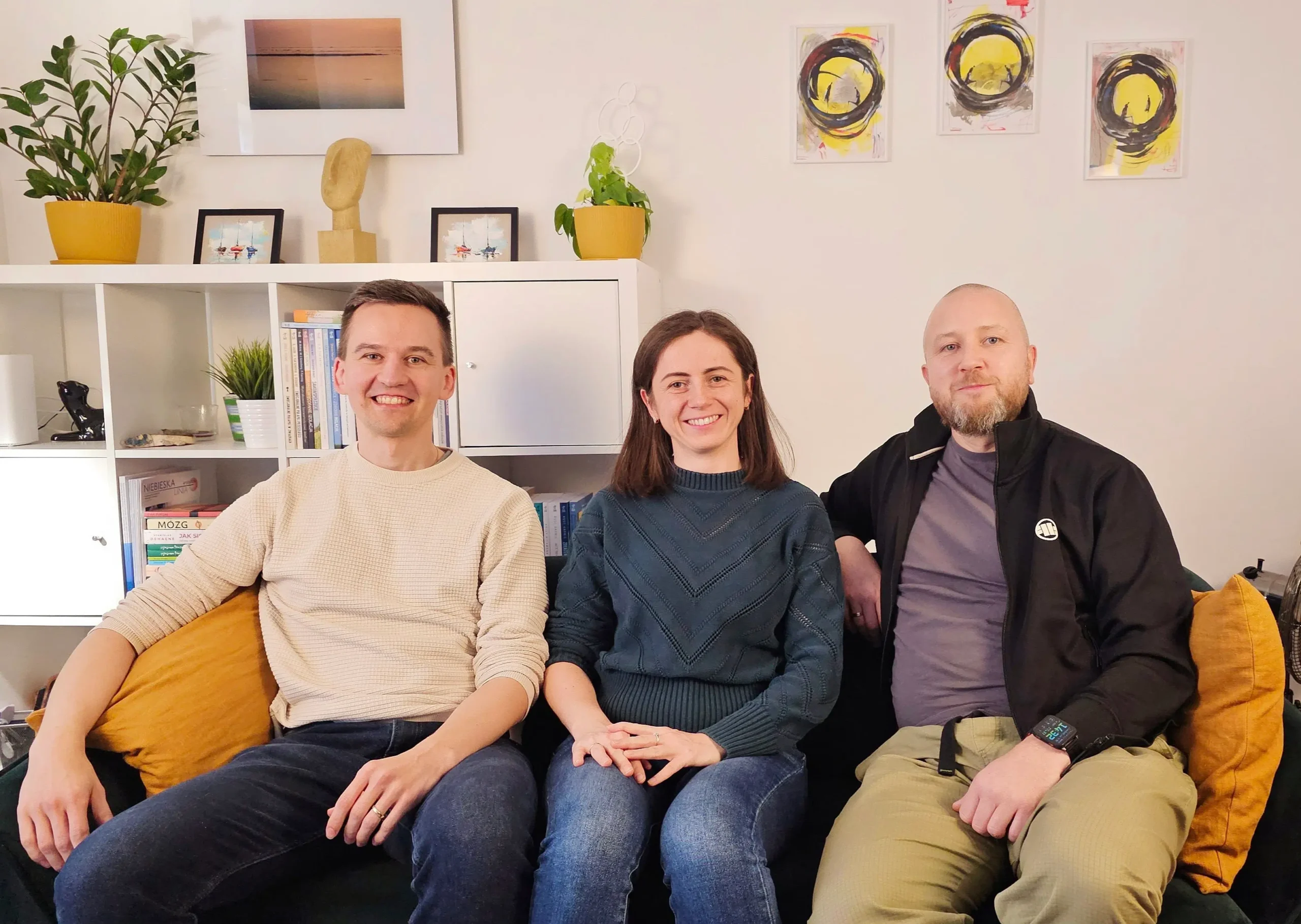
Who Is Przemek Mućko?
Przemek Mućko (Przemysław Mućko) is a psychologist and psychotherapist based in Warsaw, Poland, with many years of experience in psychotherapy. He studied psychology at SWPS University and later worked for several years at the Medical University of Warsaw and at a psychiatric treatment facility. Today, he works in outpatient psychotherapy and shares his knowledge through workshops and professional training.
His areas of expertise include cognitive behavioural therapy (CBT) and schema therapy. Much of his work focuses on understanding how our experiences, needs, and relationships influence the way we think, feel, and behave.
Alongside his therapeutic work, Przemek makes psychological knowledge accessible to a wider audience. Through his blog Psychowiedza and his podcast Ludzie tak mają, he explains complex psychological concepts in a clear, relatable, and down-to-earth way.
This ability to combine professional expertise with vivid stories and real-life examples is exactly what makes Przemek such a valuable partner for us.
How Did Our Collaboration Begin?
When we started developing Look Inside, one thing was clear from the beginning: we wanted our board game to be not only entertaining but also psychologically grounded. Alongside our own experiences with mental health challenges, we wanted to bring in the professional perspectives of experienced psychotherapists early in the development process.
We already knew Przemek through his blog Psychowiedza and his podcast Ludzie tak mają. We had always enjoyed reading and listening to his content. What we particularly appreciated was his ability to explain psychological concepts through relatable, everyday situations. His stories and examples were easy to understand, and we could often recognise ourselves or people around us in what he described.
That’s why we decided to reach out to him by email and introduce our game idea. His response was something we still remember fondly: he was immediately enthusiastic about our concept and genuinely interested in learning more. Before long, we were sitting together in our first online meeting.
What made this especially memorable was how early we were in the development process. Look Inside was still taking shape. Many things were undecided, and the game was far from what it is today. Yet Przemek already saw the potential in our approach and was eager to help us develop it further.
For us, that was a special moment. Someone with so much experience in psychotherapy took our young idea seriously, contributed his own thoughts, and seemed to enjoy exploring new possibilities just as much as we did.
That first conversation grew into a collaboration that would have a lasting influence on the characters and stories of Look Inside.
How We Created Our Characters and Their Stories
In Look Inside, players follow fictional characters through everyday life. They discover their thoughts, feelings, memories, and challenges, gradually trying to understand what lies behind their behaviour.
To make these characters believable, it isn’t enough to simply give them a mental health condition or a set of personality traits. We wanted to create people with their own personalities, backgrounds, relationships, hopes, and inner conflicts. People whose decisions and reactions make sense, even when we might have acted very differently ourselves.
And that’s where our close collaboration with Przemek began.
During a series of workshops, we developed the characters and their stories step by step. Przemek contributed his psychological expertise and experience from his therapeutic work. What impressed us most was his ability to bring psychological concepts to life. Instead of abstract explanations, our discussions turned into concrete situations, possible reactions, and little stories that helped us understand our characters more deeply.
Sometimes, it genuinely felt as though we were creating entirely new people together. We explored what experiences might have shaped them, which needs could be driving their behaviour, and how they might respond to different challenges.
One example is Anna, the main character of our first game scenario. From the outside, she seems like an ordinary 35-year-old woman. She has a job, is in a relationship, and goes about her daily life. But behind this outward appearance lies a story that remains invisible to others at first. Throughout the game, players gradually discover what Anna is struggling with and why seemingly ordinary situations can become major challenges for her.
Our own experiences with mental health challenges were an important foundation for this work. Many of the feelings, thoughts, and situations were already familiar to us from our own lives. Przemek’s expertise and therapeutic experience helped us look at these experiences from new perspectives and understand them more deeply. At the same time, he opened our eyes to the wide variety of human experiences, life stories, and challenges that go far beyond our own.
Together, we brought these different perspectives together and turned them into believable characters and relatable stories.
Przemek also recommended many topics for us to explore in greater depth afterwards. Our workshops were therefore not only creative sessions but also opportunities to learn an incredible amount.
We were especially happy to hear in our later interview that this collaboration had been a meaningful experience for him as well:
With you, I could experience something similar, just in a different way: playing together, imagining things, and being creative.
This combination of psychological expertise, creativity, and shared exploration has strongly shaped our development process. It also reflects how we want to approach Look Inside: psychological insights shouldn’t simply appear as information within a game. They should become a natural part of the stories and the gameplay experience.
Ultimately, we want players to do more than learn about the challenges someone might face. We want them to gain a sense of what those challenges can actually feel like in everyday life.
Przemek captured this idea beautifully in our interview: “I believe this game can really make a difference.”
We’re incredibly happy to have him as part of our journey and grateful for his openness, his time, and all the valuable insights he has contributed to Look Inside.